
Astra Squad
MEGAGIGA GAMES BILISIM A.S.Adventure
4.6564.00 Reviews
- Version
- 1.0.5
- Installs
- 100.00K
- Age Rating
- Everyone
Screenshots
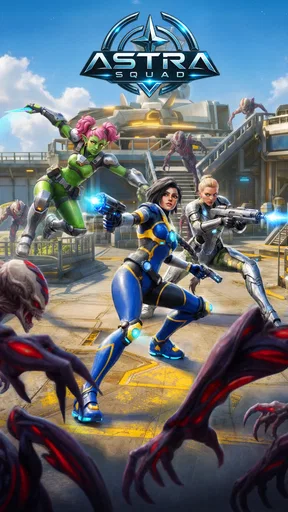
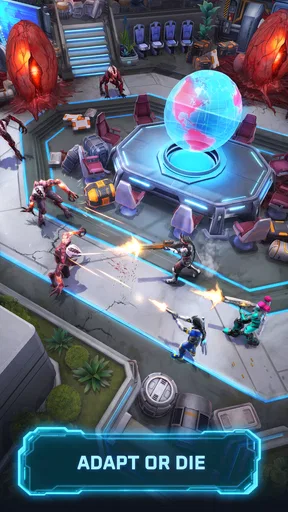
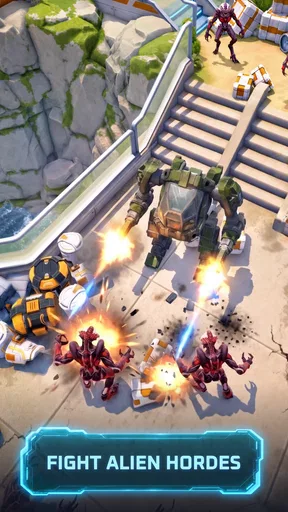
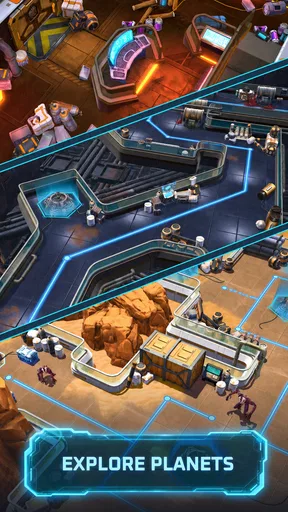
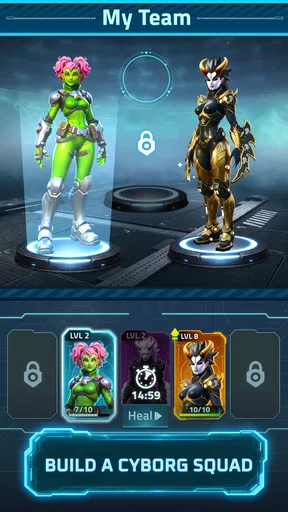
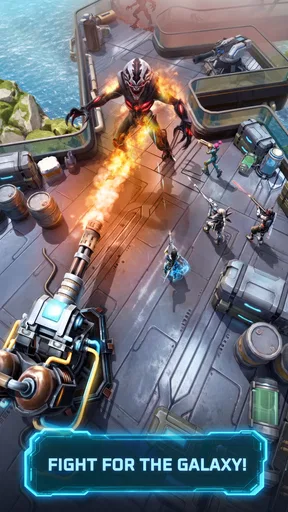
Our Review of Astra Squad
 Analysis by Appyee
I approached Astra Squad as the sort of adventure game that might end up on a shared phone or tablet, not just as a private game for one player. Its central idea is easy to understand: restore a damaged world and work toward reclaiming the stars. That gives the game a hopeful direction, but the more useful question for a household is how it fits into everyday use. Can one person pick it up for a short session without losing track of progress? Is it comfortable when several people take turns? Does its Everyone age label make it a sensible choice for younger players as well as adults?
My overall impression is positive, with an important qualification. The game is approachable enough to recommend to someone who wants a light adventure experience rather than an intimidating, highly technical challenge. At the same time, a shared device changes how I would judge it. A game can be enjoyable on its own and still become awkward when progress, purchases, and personal preferences are mixed together. With Astra Squad, I would treat the game as a good candidate for casual household play, provided the owner of the device sets clear expectations before handing it over.
How Astra Squad works in a shared household
The rebuilding theme makes the game particularly easy to introduce to another person. Instead of asking a new player to understand a complicated fictional history, I can explain the basic purpose in one sentence: the world needs rebuilding, and the stars need to be reclaimed. That simple framing helps when a child, sibling, partner, or visiting friend wants to try it without sitting through a long explanation first.
In my experience, shared-device games work best when a player can make meaningful progress without needing a long uninterrupted block of time. Astra Squad suits that kind of handoff better than an adventure that depends entirely on remembering a large map or a complicated chain of objectives. I could imagine one person playing after school, another taking a turn later, and an adult checking the game in the evening without the arrangement feeling like a formal gaming session.
That does not mean I would assume every part of the experience is equally suitable for everyone. Adventure games often become more engaging as the player understands their goals, and that learning curve can be personal. One household member may enjoy exploring and restoring the world, while another may prefer immediate action. I would let each person try it briefly before deciding whether it deserves a permanent place on a shared device.
A realistic use case is a family tablet in a living room. A younger player can explore the premise during a short break, then an older player can continue later. The important habit is to pause at a natural stopping point rather than closing the game in the middle of an important moment. That simple routine reduces arguments about who interrupted whom and makes the game feel like a shared activity instead of a contested possession.
The game is free to download, which lowers the barrier to trying it together. That is useful when nobody knows yet whether the style will appeal to the household. However, free access should not be confused with a completely cost-free environment. Astra Squad includes optional purchases ranging from ninety-nine cents to ninety-nine dollars and ninety-nine cents per item. I would discuss that clearly before letting a child play, especially on a device used by several people.
What I would check before handing over the device
My first step would be to open the game myself and understand how its opening sequence presents the world, objectives, and any purchase prompts. I would not rely only on the Everyone label to answer practical household questions. That label is useful context, but it does not replace an adult’s judgment about whether the pace, reading demands, and spending opportunities fit a particular child.
I would also decide who owns the progress. On a personal phone, that question is easy: the player and the device are usually the same person. On a shared tablet, it is less obvious. Is the game being treated as one communal project, or is one person the main player while others only visit it? Choosing one approach in advance avoids confusion when someone changes a resource, completes an objective, or moves the game forward.
This is one of the less obvious trade-offs of using an adventure game in a household. Shared progress can create a pleasant sense of cooperation, but it can also remove the feeling of personal discovery. If two players want different approaches, a single ongoing game may not satisfy both. I would therefore avoid promising that everyone will have an equal, independent journey unless the game’s available account and save options clearly support that arrangement.
Because I would not invent account behavior that is not clearly visible, I would test the boundaries directly. I would look for an obvious way to switch players, inspect whether progress is tied to the device or a sign-in, and check what happens after closing and reopening the game. Those checks matter more on a family device than they do on a private one. A few minutes spent testing can prevent a much bigger disagreement later.
Keeping progress and purchases separate
Purchases deserve special attention here. The presence of optional items means I would not let a young player use a shared device without first reviewing the device’s purchase protections and explaining that tapping a tempting offer is not the same as receiving permission to spend. I would also make sure every adult understands the rule, because inconsistent answers are often what create accidental purchases.
I like the fact that the entry price makes experimentation easy, but the broad purchase range means the game should be treated like any other free-to-play title in a household. I would begin with a no-purchase rule, then change it only after discussing what a purchase is supposed to accomplish. This creates a useful boundary: the game is available for enjoyment, while spending remains an adult decision.
Another practical tip is to record the agreed owner of the game’s progress somewhere simple, such as a household note. That may sound excessive, but it helps when several people use the same tablet. If one player is building a long-term run and another only wants to explore, knowing whose session is active avoids accidental changes. This is especially important when the game’s appeal comes from gradually rebuilding rather than from a single quick round.
I would also avoid using the game as a reward system until I knew how its progression feels. If a child is promised access only for a few minutes, but the game presents a goal that feels unfinished, stopping may become frustrating. A better routine is to give a clear time window and agree on a stopping point before play begins. That makes the household arrangement predictable without claiming that Astra Squad includes a particular timer or family-control feature.
Coordinating play without turning it into homework
The rebuilding premise naturally invites conversation. One player can explain what they restored, another can ask what the next goal is, and an adult can check whether the current session belongs to the same shared plan. I found that this kind of light coordination works better than trying to make every player follow a strict schedule. The game remains entertainment, not another household assignment.
If several people are taking turns, I would use a short handoff routine. The outgoing player can say what they were doing, what they were about to try, and whether anything should be left untouched. This is a surprisingly effective way to preserve continuity. It also reveals whether the game is genuinely enjoyable as a shared experience or whether everyone is merely waiting for their turn.
A second useful approach is to give each player a different role in the conversation, even if the game itself does not provide formal roles. One person can focus on the broad rebuilding goal, another can remember where the current session ended, and an adult can handle decisions involving purchases or account information. I am careful to describe this as a household routine rather than a built-in feature. Its value comes from organization, not from changing how the game itself works.
The main limitation is that coordination can expose differences in play style. A patient player may want to examine every possibility, while another may move ahead quickly. In a private game, that is simply a preference. On a shared device, it can feel like one person is taking away another person’s experience. If those differences become a recurring source of conflict, I would choose a game with clearly separate profiles or keep Astra Squad on one person’s device instead.
For adults sharing the game with children, I recommend asking questions that reveal understanding rather than testing memory. “What are you trying to rebuild?” is more useful than asking a child to repeat instructions. It keeps the focus on the game’s central idea and gives the adult a chance to notice whether the player is comfortable or simply tapping through unfamiliar screens.
Age context, trust, and the right kind of supervision
Astra Squad carries an Everyone content rating, so it is positioned for a broad audience. I see that as a helpful starting point for a family considering it, especially compared with adventure games built around darker themes or older-age content. Still, age labels are not personal recommendations. A younger child may need help with reading, menus, or understanding what a purchase prompt means, even when the content itself is considered suitable for everyone.
I would let the child play independently only after watching an initial session. That is not because I expect a hidden problem; it is because every child responds differently to objectives, setbacks, and optional offers. A brief shared introduction also gives the adult a chance to explain the difference between progress in the fictional world and real-world spending.
Trust works best when it is specific. Instead of saying “be careful,” I would set clear rules: ask before spending, do not change another player’s progress, and stop at the agreed point. Those instructions are easy to remember and apply directly to a shared device. They also respect the child’s independence better than constant hovering.
Older players may find the game more relaxing than demanding, depending on what they want from an adventure title. Someone looking for intense competition, deep character optimization, or a long-form challenge may find a more specialized game more satisfying. Astra Squad’s appeal, as I experienced it, comes from its accessible rebuilding direction and the ease of returning to a hopeful adventure, not from proving mastery against other players.
That distinction matters when choosing alternatives. Compared with a competitive multiplayer game, Astra Squad is the better household choice when the goal is calmer individual play and conversation around progress. Compared with a story-heavy adventure designed for one dedicated player, it may be easier to introduce casually, but it may not provide the same depth for someone who wants a tightly authored narrative. Compared with a puzzle game, its world-rebuilding premise gives the session more of a journey, while a puzzle title may be better for very short, clearly bounded turns.
Device ownership and account boundaries
The safest arrangement is to decide whether Astra Squad belongs to the device owner or to a particular player. If it is the device owner’s game, everyone should understand that their actions contribute to one shared run. If it belongs to one player, other household members should ask before opening it. Neither approach is universally better; the right choice depends on whether the household values cooperation or personal control.
I would be especially cautious when the device is used for school, work, or several unrelated accounts. A game that is harmless as entertainment can become inconvenient if a player signs into the wrong place, changes a setting, or assumes that personal progress will follow them to another device. I would keep the game’s use within the device arrangement that has already been tested, rather than promising seamless movement between users.
The developer is MEGAGIGA GAMES BILISIM A.S., and the current release I reviewed is version 1.0.5. That is useful to know when comparing the experience across devices or discussing an update with another household member. I would still judge the game by what is actually available on the device in front of me, because an update can change menus or pacing and a shared-device routine may need to be adjusted afterward.
The minimum operating-system requirement is Android 7.1, which makes the game relevant to some older Android hardware rather than limiting it to the newest phones. Even so, compatibility does not guarantee that every older device will feel equally comfortable. I would test the game on the actual shared tablet or phone, paying attention to touch response, readability, and whether the device is already crowded with other apps.
Who should choose it, and who should skip it
I would recommend Astra Squad to a household that wants a free adventure game with a clear, optimistic purpose and room for casual turn-taking. It is a sensible first try for someone who likes the idea of restoring a world but does not want to commit immediately to a complicated or highly competitive experience. The game is also a reasonable option for adults who want to share a device with younger players while keeping the conversation about spending and progress straightforward.
I would skip it as a shared game if the household requires completely separate personal journeys and cannot tolerate anyone else touching the main save. I would also look elsewhere for a player who wants a demanding strategy system, a competitive social experience, or a long cinematic campaign with a carefully controlled pace. In those cases, a more specialized adventure or strategy game would be a better match than trying to make this one serve every preference.
The rating gives the game a strong public signal: it averages 4.7 from around twelve thousand ratings, and it has more than one hundred thousand installs. I read that as evidence that the concept has found an audience, but not as a guarantee that every family will enjoy the same style of play. A popular game can still be wrong for a household that dislikes shared progress or wants firm separation between players.
There are also around three hundred twenty-five written reviews, which can be useful when a prospective player wants to see how other people describe the experience. I would use those comments as a supplement, not a substitute for trying the opening portion personally. Reviews can reveal recurring friction, but they cannot tell me whether the game’s pace fits the particular person who will share the device.
My household verdict
After considering Astra Squad as both an adventure game and a shared-device activity, I think its strongest quality is the ease with which its rebuilding theme creates a common point of reference. People can take turns, talk about what has changed, and return to the larger goal without needing the game to become a formal group project. That makes it more suitable for relaxed household use than many alternatives built around competition or private mastery.
My recommendation comes with a simple condition: establish ownership, spending rules, and stopping habits before the first serious session. Those boundaries matter more than any feature list when several people use one device. I would start with a short trial, let each intended player handle the game, and then decide whether the household prefers one communal run or one clearly designated player.
For me, the free entry point, broad Everyone rating, and accessible adventure premise make Astra Squad worth trying. The optional purchase range means adults should remain attentive, and the uncertainty that naturally comes with shared progress means it is not ideal for every family. If your household wants a calm, hopeful game that can be discussed and passed around, I can recommend giving it a fair chance. If you need strict account separation or a deeper specialist challenge, I would choose a different title rather than forcing this one into a role it was not designed to fill.
Privacy and Permissions
See what permissions an app requests and how it handles your data.
- Wi-Fi connection information
- view Wi-Fi connections
- Other
- view network connections, full network access, run at startup, control vibration, prevent device from sleeping, Google Play license check
Verdict
Strengths of Astra Squad
- Fast-paced squad battles are easy to learn but remain strategically engaging.
- Distinct heroes give team-building meaningful variety and replay value.
- Bright visuals and polished animations make matches enjoyable to watch.
- Short sessions fit well into quick breaks or mobile play.
- Regular progression provides clear goals beyond individual battles.
Limitations of Astra Squad
- Some upgrades may require considerable grinding over time.
- Matchmaking can feel uneven when facing more developed squads.
- The interface may feel crowded for new players at first.
- Limited energy or timers can interrupt longer play sessions.
- Online features require a stable connection to work reliably.
Similar Picks in This Category
View All
Roblox
Roblox Corporation4.2

Pokémon GO
Niantic, Inc.3.5

Ninja warrior: legend of adven
TOH Games4.6

Ninja Arashi
Black Panther4.6

Eyes - The Horror Game
Fearless Games sp. j.4.5

Critical Action:Gun Strike Ops
FPS Shooter & Action Game4.3
Frequently Asked Questions
What is Astra Squad, and what kind of gameplay does it offer?
Astra Squad is a space-themed action game focused on squad-based combat, progression, and strategic decision-making. Players typically assemble a team of futuristic characters or units, improve their abilities, and take part in missions against increasingly difficult enemies. The experience combines fast-paced battles with planning, upgrades, and resource management, making it suitable for players who enjoy science-fiction adventures with both action and tactical elements.
Can Astra Squad be played offline, or does it require an internet connection?
Astra Squad may require an internet connection for certain features, such as downloading additional game content, synchronizing progress, accessing events, watching advertisements, or using online services. Some parts of the game may be available offline, but this can depend on the version installed and the device being used. For the most reliable experience, players should launch the game while connected to a stable Wi-Fi or mobile network.
Is Astra Squad free to download, and does it include in-app purchases?
Astra Squad can generally be downloaded without an upfront purchase, although availability and pricing may vary between Android and iOS. Like many mobile games, it may include optional in-app purchases for resources, character improvements, cosmetic items, or faster progression. These purchases are not always necessary to enjoy the main gameplay, but users should review the store listing and configure parental controls if children will be playing.
What devices are compatible with Astra Squad?
Compatibility depends on the operating system version, available storage, hardware performance, and the specific edition of Astra Squad offered in your region. Older phones or tablets may experience longer loading times, reduced graphics quality, or occasional performance issues. Before downloading, check the official Google Play or App Store listing for the current Android or iOS requirements and make sure your device has enough free space for updates.
Does Astra Squad offer progression, upgrades, or multiplayer features?
Astra Squad is designed around developing a stronger squad over time through missions, rewards, equipment, abilities, or other upgrade systems. Progression usually gives players reasons to return and experiment with different team combinations. Depending on the current version, the game may also include competitive, cooperative, or event-based online features. Because these systems can change through updates, it is worth checking the latest in-game information before starting.
Play our best games!


